

Translation: PL
My name is Tomasz.
I'm founder of the Tom's Automation Systems.
My passion driven history has started with first Zilog Z80 based micro-controller which I have developed from kit in 1992 when I was in high school.
This set was named New CA80 Microcomputer and was build by Stanisław Gardynik, founder of MIK Company from Raszyn, Poland.
Set was availiable with very good documentation manuals, this simple microcomputer allowed me to learn the basics of electronics and microelectronics in few weeks.
Today we would name CA80 microcomputer the embedded kit development platform. At former times it was programmable using hard to code the assembly language mnemonics. Program storage was done on the regular home tape recorder that have to be specially adopted. Later an expansion kit for EPROM programming was available. The UV lamp was used for EPROM memory deletion.
I've been using CA80 basically for simple home lighting control.
The extra description page about the CA80 here.
Following the new hobby idea, I have started studies at Silesian Technical University on the Automation and Robotics faculty. Shortly after my graduation I've founded my AUTOMATION SYSTEMS business. The industrial adventure with SCADA systems and PLCs has started.
Now it's already longer than a decade since I was gathering the experience as an automation engineer. This was mainly during automation systems commisioning for bigger and smaller projects where I was working alone or as a part of a team. I'm able to offer the professional enginerring force and to provide the services related to the HMI/SCADA systems, PLC and DCS systems programming, commissioning and training. For the details please checkup my profile and certificates pages.
As a hobby I've still continued small research projects. Few of them were done in field of embedded computers.
In 2007 I've purchased one of the first ARM based MOXA computer.
With program written in GNU C and using uC-Linux operating system this small device was able to record my car route and store it in simple text format for further processing. At the time this MOXA PC had no build in graphic card. The only option you could use to interface them was the www interface over ethernet or terminal connection.
In times when the mobile telephones were still in keyboard age and iPhone was going to be introduced to market, I've managed to build simple GPS logger.
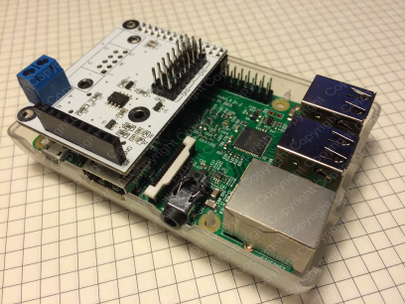
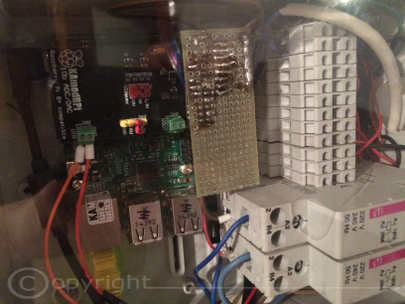
My hobby continues and in free time I'm improving home by implementing simple automation.
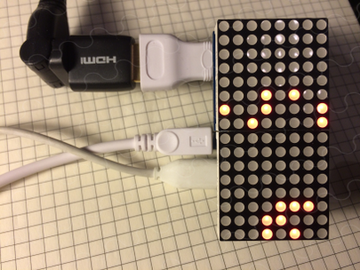
Quite
recently the PIzero was released and I've adopted it quickly to role of
my desk binary clock.
| Period | Focus | Key outcomes |
|---|---|---|
| Early years | Electronics hobby, DIY projects, repairing and modifying devices. | Built strong intuition for circuits, components and practical problem-solving. |
| Formal education | Studies in electronics and automation, control systems, and programming. | Gained solid theoretical base in automation, PLC concepts and industrial control. |
| First technical roles | Panel wiring, testing, commissioning support, on-site troubleshooting. | Learned how real plants work, how to diagnose faults and how to work safely on site. |
| Automation engineer | PLC/HMI/SCADA programming, system design, commissioning of machines and lines. | Delivered complete automation solutions from concept to start-up and handover. |
| OT integration & Industry 4.0 | Connecting shop-floor systems to MES, databases and IIoT platforms. | Specialised in OT connectivity, data models, secure communication and scalable architectures. |
| Consulting & independent projects | Advising clients on automation strategy, OT integration and Industry 4.0 roadmaps. | Helps companies turn technical options into practical, realistic project plans. |
| Industry / plant type | Typical role | Main responsibilities |
|---|---|---|
| Discrete manufacturing and assembly lines | Automation engineer, commissioning engineer | PLC/HMI programming, safety logic, on-site start-up and optimisation of machines and lines. |
| Process and batch plants | Control engineer, project engineer | SCADA configuration, alarm philosophy, sequence control, integration with field instruments. |
| Packaging and material handling | Project engineer, commissioning support | Motion control, conveyors, sensors, diagnostics and performance tuning. |
| Cross-site OT integration | OT integration engineer, consultant | Collecting data from multiple PLC/SCADA systems, normalising tags and exposing data to IT systems. |
| Industry 4.0 / IIoT initiatives | Technical lead, advisor | Defining architectures, selecting technologies, prototyping use cases and guiding implementation. |
| International and multi-vendor projects | Independent automation specialist | Coordinating with diverse teams, working with different vendor platforms and adapting to local standards. |
My interest in automation is strongly connected to a long-term passion for space exploration and advanced technology. Space missions demand extreme reliability, precise control and clear engineering thinking – qualities that are just as important in industrial automation.
When I design or commission a system, I bring the same mindset: understand the physics, define clear operating conditions, design for failure modes and keep things as simple as possible while still meeting ambitious goals.
This perspective helps me build automation and OT integration solutions that are not only technically interesting, but also robust, maintainable and aligned with how people actually operate plants every day.
When I design or commission a system, I bring the same mindset: understand the physics, define clear operating conditions, design for failure modes and keep things as simple as possible while still meeting ambitious goals.
This perspective helps me build automation and OT integration solutions that are not only technically interesting, but also robust, maintainable and aligned with how people actually operate plants every day.
If you want to see how this history translates into real outcomes, take a look at the project portfolio and the formal certifications. Together they show both the practical results delivered and the continuous learning behind them.